
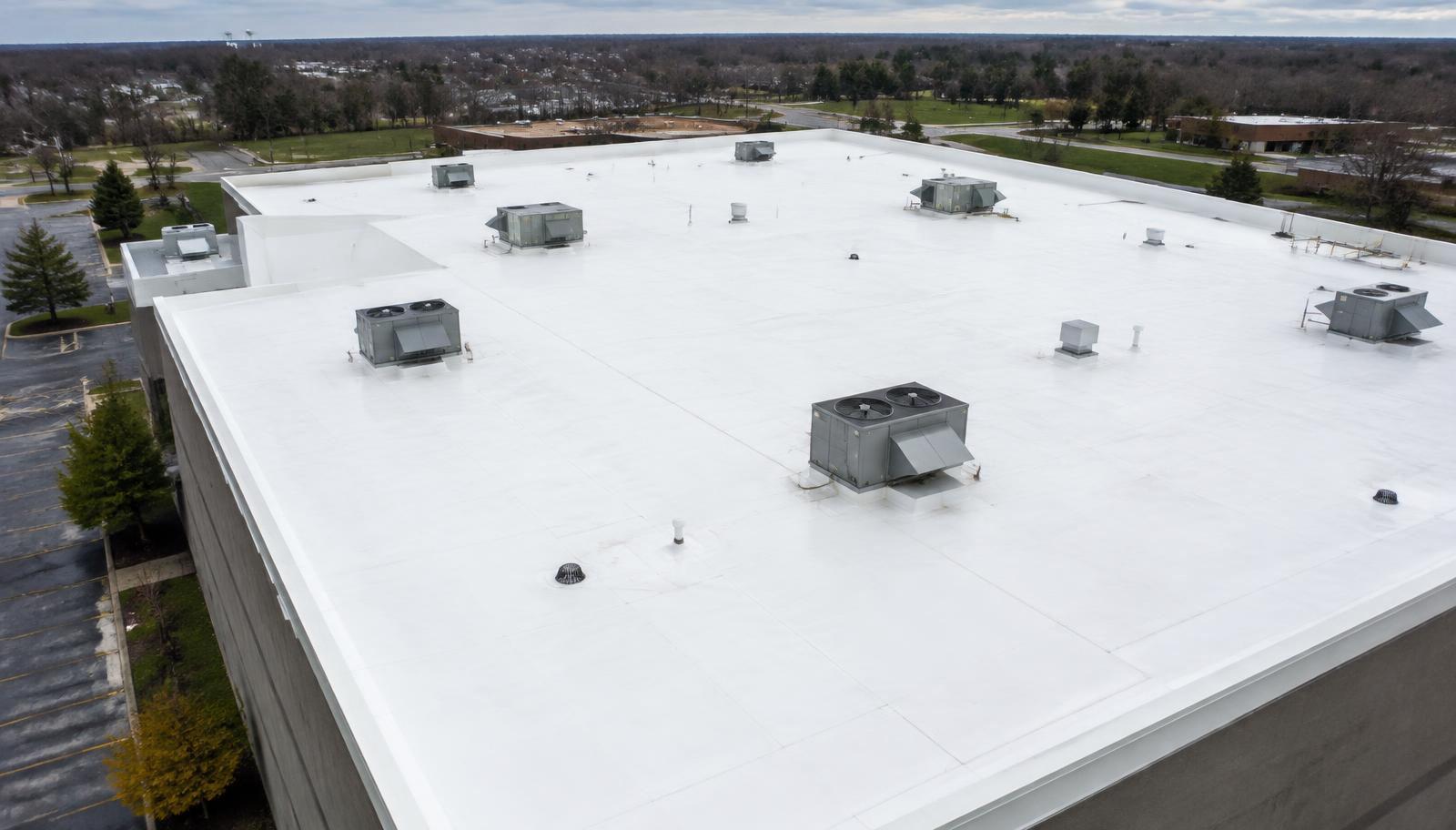
Roof Systems
TPO Roofing
Choosing a TPO roof starts with understanding the building beneath it. We evaluate your existing roof, drainage, insulation, and project requirements to help you plan an installation or replacement that fits your property.
What TPO Is
Is TPO right for your building?
TPO (thermoplastic polyolefin) is a single-ply membrane used on low-slope and flat roofs. It is installed in wide sheets, and the seams are joined with hot air so the overlapping sheets fuse together. It is a common choice for commercial and industrial buildings, but it isn't the right answer for every roof.
Existing condition and drainage
Wet insulation, ponding water, and the number of roofs already in place shape what a new membrane needs underneath it.
Facility use and exposure
Foot traffic, rooftop equipment, and exhaust or grease discharge affect membrane choice and detailing.
Insulation and energy goals
Insulation thickness and code requirements often matter as much as the membrane color.
Budget and ownership plans
How long you plan to own the building helps decide between repair, recover, and full replacement.

Why Owners Choose It
Benefits of TPO
Value
TPO offers a practical balance of performance and project cost. The right assembly depends on your building, existing roof, and budget.
Energy savings
A reflective TPO surface can reduce solar heat absorption. Potential cooling savings depend on climate, insulation, and how the building is used.
Weather resistance
TPO is designed for outdoor exposure to sunlight and changing temperatures. Drainage, attachment, and flashing details remain essential to roof performance.
Strength and durability
Reinforcement and heat-welded seams contribute to a durable roof covering. Membrane selection and protection around service areas help manage wear and puncture risks.
Chemical resistance
TPO can resist certain rooftop contaminants, but compatibility varies. We evaluate expected exposures and check the selected manufacturer’s guidance.
Bioresistance
Resistance to fungal growth is one advantage of TPO membranes. Routine cleaning and inspections still matter, especially where dirt and moisture accumulate.
Fire performance
TPO can be part of a fire-rated roof assembly. The applicable rating depends on the complete tested system and its installation.
Cost of ownership
Evaluate the full ownership cost, including installation, inspections, repairs, and eventual replacement. A suitable assembly and regular maintenance support long-term value.
The Assembly
How a TPO roof comes together
A TPO roof is a system, not just a membrane. The deck, insulation, any cover board, and the membrane work together with the edges, penetrations, and drains. How the layers are attached depends on the deck, wind requirements, and the manufacturer's approved system.
Mechanically attached
Fasteners and plates secure the membrane at the seams. Common on steel decks and suited to many reroof projects.
Fully adhered
The membrane is bonded to the substrate with adhesive, giving a smooth surface with no visible fastener rows.
Induction-welded
Plates are fastened beneath the membrane and bonded to its underside with an induction tool, reducing seam fastening.
Every component must be compatible with the selected manufacturer's system.
Project Results
Before & After
Industrial Auto Parts Manufacturing Plant · Glasgow, KY
An approximately 145,000-square-foot industrial re-roof: the existing system was removed down to the metal deck, two layers of ISO insulation were installed, and a new mechanically attached TPO roof was completed.
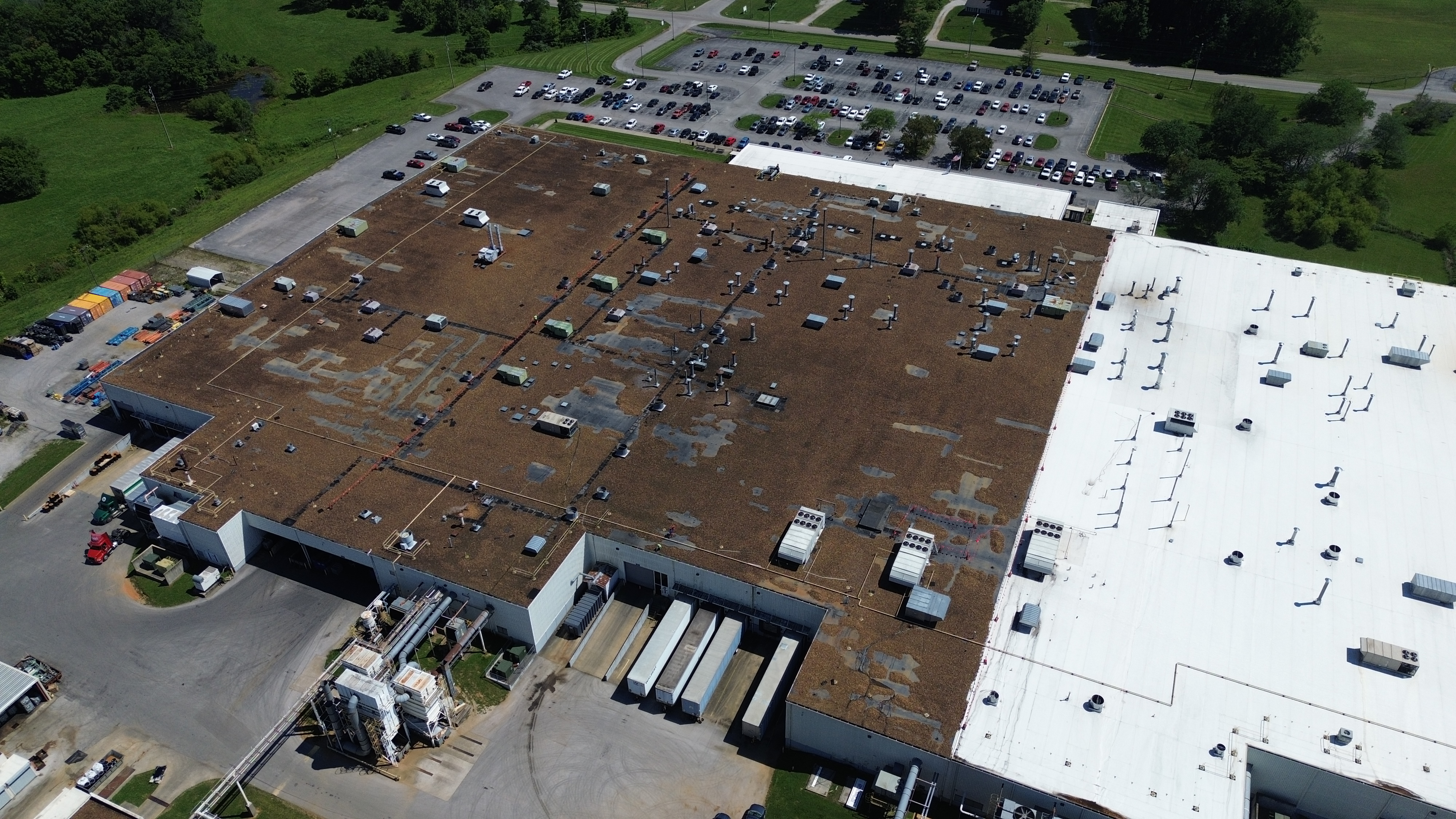 Before
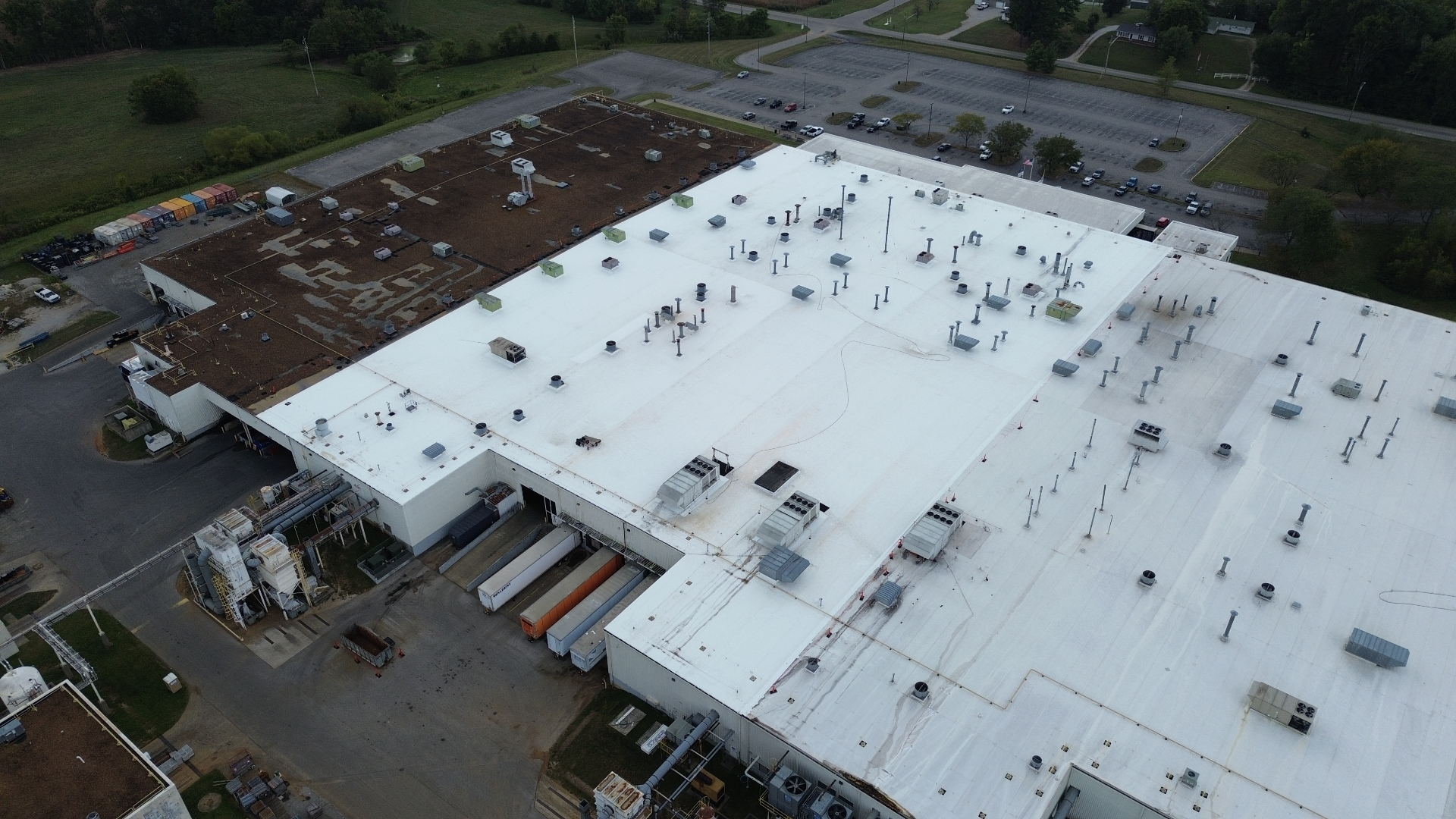 After
Your Options
Options for your TPO roof
Already have a TPO roof with leaks, seam separation, or ponding? That doesn't automatically mean replacement. We look at what's causing the problem and recommend the smallest fix that solves it.
New installation
A TPO system planned with the building's insulation, drainage, and rooftop equipment in mind.
Learn about New installationReplacement or recover
When the existing roof has reached the end of its service, we assess whether a tear-off or a recover makes sense.
Learn about ReplacementRepair and maintenance
Open seams, loose flashings, and punctures can often be repaired without replacing the roof.
Learn about Repair & maintenance
Before We Recommend
What we evaluate before recommending TPO
Roof condition and moisture
Where the existing membrane has failed and whether water has reached the insulation.
Drainage
Slope, drains, scuppers, and any areas where water collects.
Deck and attachment
The deck type and condition, and which attachment methods it can support.
Rooftop equipment and exposure
HVAC units, penetrations, foot traffic, and anything discharged onto the roof.
Insulation
Current thickness and condition compared with your goals and code requirements.
Access and operations
How work can be staged around your tenants, staff, and day-to-day operations.
Questions
TPO roofing FAQs
Neither is a universal winner. Both are single-ply thermoplastic membranes, and the right choice depends on your building's use, rooftop exposure, budget, and the existing roof. If oils, grease, or other substances reach the roof, we assess how they interact with each membrane before recommending one.
Many TPO concerns, like an open seam, a damaged flashing, or a puncture, can be repaired. Replacement makes more sense when moisture has spread through the insulation, the membrane is broadly deteriorated, or repairs keep returning. We'll tell you which one your roof actually needs.
Sometimes. A recover depends on the condition of the existing roof, how much wet insulation is present, how many roofs are already in place, deck capacity, and local code. A roof that isn't a good candidate needs a tear-off, and we'll explain why.
Roof size and access, tear-off versus recover, insulation thickness, attachment method, membrane thickness, the number of penetrations and rooftop units, edge and drainage details, and the warranty terms selected. We provide pricing after we've seen the roof.
Plan on periodic inspections, especially after severe weather, plus keeping drains clear and checking seams and flashings. Warranty coverage depends on the manufacturer, the specified assembly, and the terms of that warranty, so we review those details with you during planning.
Let’s evaluate your roof.
Tell us what you’re seeing and what you’re planning. We’ll help you understand your roof’s condition and the options worth considering.