
Roof Systems
EPDM Roofing
EPDM is a flexible synthetic-rubber single-ply membrane for commercial low-slope roofs. We review your building and existing roof first, then recommend a repair, recover, or replacement that fits.
What EPDM Is
Is EPDM right for your building?
EPDM (ethylene propylene diene monomer) is a cured synthetic-rubber membrane for low-slope and flat roofs, available in black or white. Sheets are joined with manufacturer-approved seam tapes and adhesives. It suits many commercial and industrial buildings, but the right choice depends on your facility.
Roof condition and moisture
Wet insulation and failed areas in the existing roof shape whether a repair, recover, or tear-off makes sense.
Rooftop equipment and flashings
Curbs, pipes, and units each need compatible EPDM flashing details and service access.
Insulation and drainage
Insulation thickness, slope, and drain locations shape the assembly beneath the membrane.
Attachment and deck load
The deck type and structural capacity determine whether adhered, fastened, or ballasted attachment is suitable.
Why Owners Choose It
Benefits of EPDM
Long-term performance
EPDM has an established service record on commercial roofs. Installation quality, roof conditions, and regular care determine how long a given roof lasts.
Lightweight and flexible
The rubber membrane accommodates normal building movement. Total assembly weight still matters, especially where ballast is used.
Material and color choices
Black and white membranes suit different buildings and climates. Recycling at end of life depends on material condition and local programs.
Weather resistance
EPDM is made to withstand sun and temperature swings. Wind and hail performance depends on the tested assembly, attachment, and substrate.
The Assembly
How an EPDM roof comes together
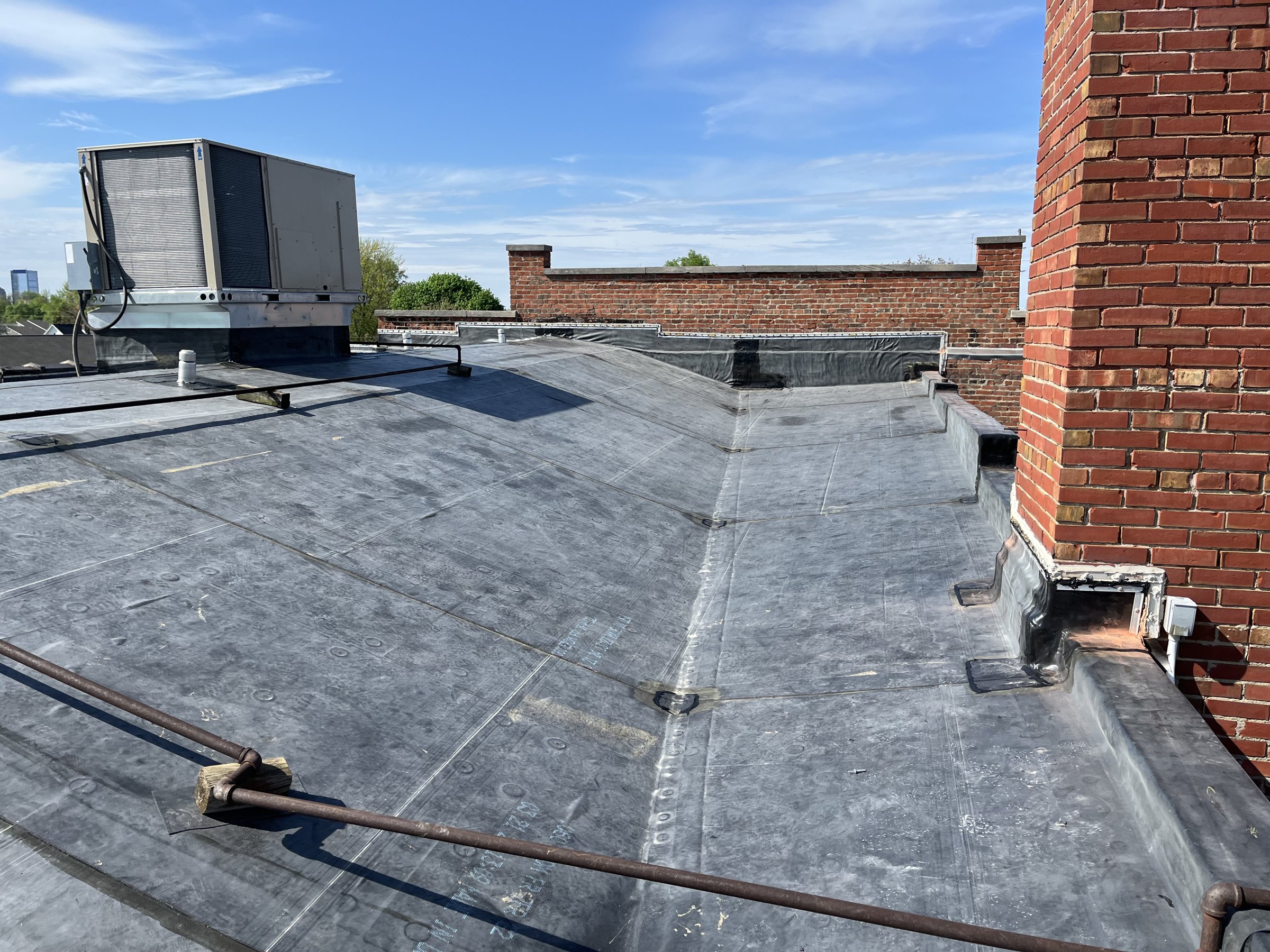
An EPDM roof works as a complete assembly: deck, insulation, any specified cover board, and the rubber membrane, with seams joined by primer and seam tape and flashed at edges, penetrations, and drains. The attachment method depends on the deck, wind requirements, and what the manufacturer approves for that system.
Fully adhered
The membrane is bonded to an approved substrate with adhesive, leaving a smooth surface without fastener rows.
Mechanically attached
Fasteners and plates secure the sheets along the laps, which are then sealed with seam tape. Common on steel decks.
Ballasted
Loose-laid membrane held in place by stone or pavers. Requires confirmed structural capacity and suitability for local wind exposure.
Each method is used only where the selected manufacturer approves it, and every primer, tape, adhesive, and flashing must be approved for EPDM.
Project Results
Before & After
EPDM project photos coming soon
We're gathering before and after photos from a completed EPDM roof. They'll appear here once they're ready.
Your Options
Options for your EPDM roof
Planning a new EPDM roof or dealing with leaks on an existing one? We find the cause first, then recommend the scope that addresses it, whether that is a repair, a recover, or a new system.
New installation
An EPDM assembly planned around the deck, insulation, drainage, attachment method, and rooftop equipment.
Learn about New installationReplacement or recover
We check moisture, existing layers, and deck condition to decide between a tear-off and a recover.
Learn about ReplacementRepair and maintenance
Punctures, open seams, and flashing issues can often be repaired with compatible EPDM materials.
Learn about Repair & maintenance
Before We Recommend
What we evaluate before recommending EPDM
Roof condition and moisture
Where the existing roof has failed and whether water has reached the insulation.
Drainage
Slope, drains, scuppers, and any areas where water collects.
Deck and structural load
Deck type and condition, and whether it can carry the planned assembly, including ballast.
Seams, flashings, and equipment
Seam condition, edge and curb flashings, and how rooftop units are serviced.
Insulation and compatibility
Insulation thickness and condition, plus which existing materials the EPDM system can be installed over.
Access and operations
How work can be staged around your tenants, staff, and day-to-day operations.
Questions
EPDM roofing FAQs
EPDM is a cured synthetic rubber. Its seams are joined with manufacturer-approved primers, seam tapes, and adhesives. TPO and PVC are thermoplastics with heat-welded seams. Each can suit a low-slope roof; your building, existing roof, and budget decide which fits.
There is no fixed number. Service life depends on the assembly, installation quality, drainage, rooftop traffic, local weather, and how consistently the roof is inspected and maintained.
Curbs, pipes, and other penetrations are flashed with compatible EPDM flashing materials and accessories. Walkway protection can help where technicians service equipment regularly.
Often. Punctures and open seams can usually be repaired when the surrounding membrane is in sound condition. A recover depends on moisture in the existing roof, the number of existing roofs, deck condition, and code.
Price depends on roof size and access, tear-off or recover, insulation, attachment method, and the number of details. Plan on periodic inspections and clear drains. Warranty terms depend on the manufacturer and specified system, and we review them with you during planning.
Let’s evaluate your roof.
Tell us what you’re seeing and what you’re planning. We’ll help you understand your roof’s condition and the options worth considering.